
Replacing missing teeth is one of the most important decisions a patient can make for their long-term oral health. Many people searching for tooth replacement options eventually ask the same question. Are dental implants or dentures better in the long run?
Both solutions can restore your smile, improve chewing ability, and help you feel more confident in everyday life. However, they function very differently over time. In many cases, dental implants provide a more stable and long-lasting solution, while dentures offer a more affordable and removable alternative.
At iHeart Dental in Rincon, GA, Dr. Misty M. Seale and our experienced team help patients explore both options so they can choose the treatment that best fits their health, goals, and lifestyle. Our practice provides traditional dentures, digital dentures, dental implants, and implant-supported dentures, allowing patients to receive comprehensive dental care in one comfortable setting.
This Article Will Address
- Are dental implants better than dentures?
- Why do dentures become loose over time?
- Can dental implants prevent bone loss in the jaw?
- Which option feels more like natural teeth?
- How long dental implants last compared to dentures
- The long-term cost and maintenance of each treatment
- When dentures may still be the right solution
Dental Implants vs Dentures: What Is the Difference?
Before comparing the long-term benefits of each option, it helps to understand how dental implants and dentures work.
What Are Dental Implants?
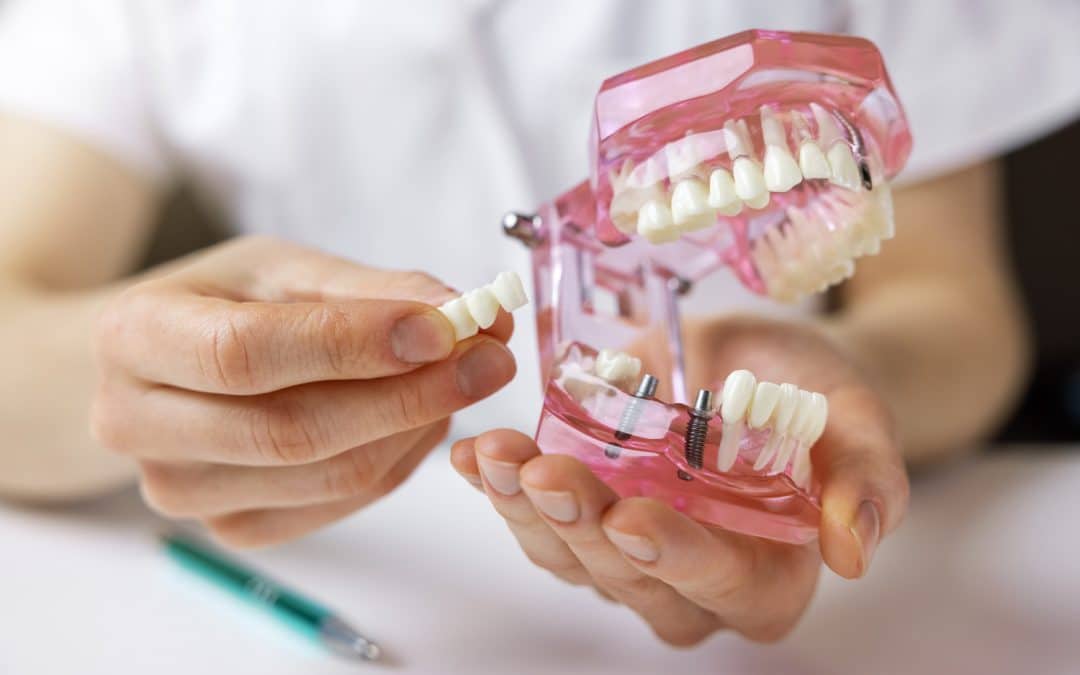
Dental implants are small titanium posts that are surgically placed into the jawbone to replace missing tooth roots. Once the implant integrates with the bone, it can support a dental crown, bridge, or implant-supported denture.
Key characteristics of dental implants include:
- Titanium posts placed in the jawbone
- Function as artificial tooth roots
- Provide support for crowns, bridges, or implant-supported dentures
- Stimulate the jawbone to help maintain bone strength
- Offer long-term stability and durability
Dental implants are designed to mimic the structure of natural teeth, which allows them to restore both function and appearance.
What Are Dentures?
Dentures are removable prosthetic device that replace several missing teeth or an entire arch of teeth. They rest on the gums and are custom designed to match a patient’s smile.
Dentures may include:
- Full dentures that replace an entire arch of teeth
- Partial dentures that replace several missing teeth
- Digital dentures that use modern technology for improved fit and appearance
Dentures remain a reliable treatment for many patients, especially those looking for a non-surgical or more affordable tooth replacement option.
Are Dental Implants Better Than Dentures?
Dental implants are often considered the more advanced long-term solution because they integrate with the jawbone and provide stability that closely mimics natural teeth. However, dentures can still be an appropriate treatment depending on a patient’s health, budget, and dental needs.
In general, implants offer advantages in several areas:
- Stability. Implants remain securely anchored in the jawbone.
- Longevity. Implants can last decades with proper care.
- Maintenance. Implants do not require removal for daily cleaning.
- Daily convenience. Implants eliminate the need for adhesives.
- Long-term oral health. Implants help preserve jawbone structure.
Dentures, on the other hand, can still be beneficial for patients who prefer a non-surgical option or need a faster solution for replacing multiple missing teeth.
How Long Do Dental Implants Last Compared to Dentures?
Longevity is one of the most important factors when comparing dental implants and dentures.
Dental implants are designed to be a long-term tooth replacement solution. With proper oral hygiene and regular dental visits, implants can last20 years to a lifetime.
Dentures generally have a shorter lifespan because they are made of acrylic and are more fragile. Also the shape of the jaw changes over time after teeth are lost causing the dentures to become unstable leading to breakage. As the jawbone shrinks, dentures may require adjustments or replacement.
Typical denture timelines include:
- Denture relines every few years to maintain fit
- Denture replacement approximately every 5 to 10 years
- Periodic adjustments as the gums and bone change
Because implants remain anchored in the jawbone, they typically require fewer long-term replacements.
Why Do Dentures Become Loose Over Time?
Many denture wearers eventually notice that their dentures feel looser than when they were first placed. This change is usually caused by natural bone loss in the jaw.
When a tooth is lost, the bone that once supported that tooth begins to shrink. Over time, this process changes the shape of the gums and jaw.
Several factors contribute to denture looseness:
- Natural bone resorption after tooth loss
- Gradual changes in gum tissue
- Loss of suction between the denture and gums
- Increased reliance on denture adhesives
As these changes occur, dentures may need adjustments, relines, or replacement to restore comfort and stability.
Can Dental Implants Stop Bone Loss?
Yes! Dental implants are unique because they replace the function of a tooth root. When you chew or bite with an implant-supported tooth, the implant transfers pressure into the jawbone. This stimulation helps maintain bone density.
Benefits of implants for bone health include:
- Stimulation of the jawbone during chewing
- Preservation of bone structure
- Support for long-term facial appearance
- Reduced risk of facial collapse associated with missing teeth
At iHeart Dental in Rincon, GA, advanced technology such as cone beam CT imaging allows our team to evaluate bone structure and plan implant treatment with precision.
Which Option Feels More Like Natural Teeth?
Many patients want their replacement teeth to look and feel as natural as possible. Because dental implants are fixed in the jawbone, they often provide a more natural experience.
Dental implants can offer advantages such as:
- Improved speech confidence
- Greater stability while eating
- Stronger bite force
- Comfortable daily function
Dentures can restore appearance and chewing ability, but they may move slightly when speaking or eating. Some patients also need to avoid certain foods that can shift dentures out of place.
For many people, implants provide the closest experience to having natural teeth again.
Which Option Costs More Over Time?
Cost is another important consideration when choosing between dentures and dental implants.
Dentures typically have a lower upfront cost. This makes them a common choice for patients looking for an affordable solution to replace missing teeth.
Dental implants require a larger initial investment because they involve surgical placement and custom restoration.
However, long-term costs can vary depending on maintenance and replacement needs.
Over time, denture-related costs may include:
- Relines or adjustments
- Replacement dentures
- Adhesive products
Because implants can last much longer and require fewer replacements, they may offer better long-term value for some patients.
Who Is a Good Candidate for Dentures or Dental Implants?
The best tooth replacement option depends on several factors including oral health, bone density, and personal goals.
Patients who may benefit from dental implants often include those who:
- Have healthy jawbone structure
- Want a permanent tooth replacement
- Desire strong chewing ability and stability
Patients who may benefit from dentures may include those who:
- Prefer a non-surgical treatment option
- Need a quicker solution for tooth replacement
- Have extensive tooth loss
In some cases, implant-supported dentures can provide a middle ground by combining the stability of implants with the coverage of dentures.
Can Dentures Be Converted to Implant-Supported Dentures Later?
Many patients begin with traditional dentures and later choose to upgrade to implant-supported dentures.
Implant-supported dentures use dental implants to anchor the denture in place. This can significantly improve stability and chewing ability.
Benefits of implant-supported dentures may include:
- Reduced denture movement
- Improved comfort
- Better chewing function
- Increased confidence while speaking
A consultation and imaging evaluation can help determine whether a patient is a candidate for this type of treatment.
Dental Implants vs Dentures Comparison
When comparing dental implants and dentures, several factors can help guide the decision.
Longevity
Dental implants can last decades or longer. Dentures typically require replacement every 5 to 10 years.
Stability
Implants are anchored in the jawbone. Dentures rest on the gums and may shift over time.
Comfort
Implants function similarly to natural teeth. Dentures may require adjustments to maintain comfort.
Bone preservation
Implants help stimulate and preserve jawbone. Dentures do not provide this stimulation.
Maintenance
Implants are brushed and flossed like natural teeth. Dentures must be removed for cleaning.
Cost over time
Dentures often cost less initially. Implants may provide greater long-term value.
Choosing the Right Tooth Replacement Solution
Both dental implants and dentures can restore your ability to eat, speak, and smile with confidence. Dentures remain a reliable and accessible solution for many patients, while dental implants often provide the most natural feel and long-term durability.
The right choice ultimately depends on your oral health, lifestyle, and long-term goals.
Patients considering dental implants or dentures in Rincon, GA, are encouraged to schedule a consultation with Dr. Seale at iHeart Dental. Our team provides comprehensive restorative dentistry in a comfortable and welcoming environment where your care and comfort come first. We will help you explore your options and choose the treatment that best supports your long-term oral health and confidence.
Sources
Misty M. Seale, DMD
Dr. Misty M. Seale, DMD, a graduate of the Medical College of Georgia, specializes in general, preventative, restorative, and cosmetic dentistry and is the proud owner of iHeart Dental. Her practice emphasizes comfort, convenience, and personalized patient care, providing a cozy environment that feels like a home away from home. Outside of her passion for dentistry, Dr. Seale enjoys spending time with her family, camping, and Jeeping.

A Smile is the Key to Everybody’s Heart
We are dedicated to providing the highest-level dental care in a comfortable and relaxed setting while giving love, compassion, and respect for our patients and their dental needs leading to a healthier smile.