
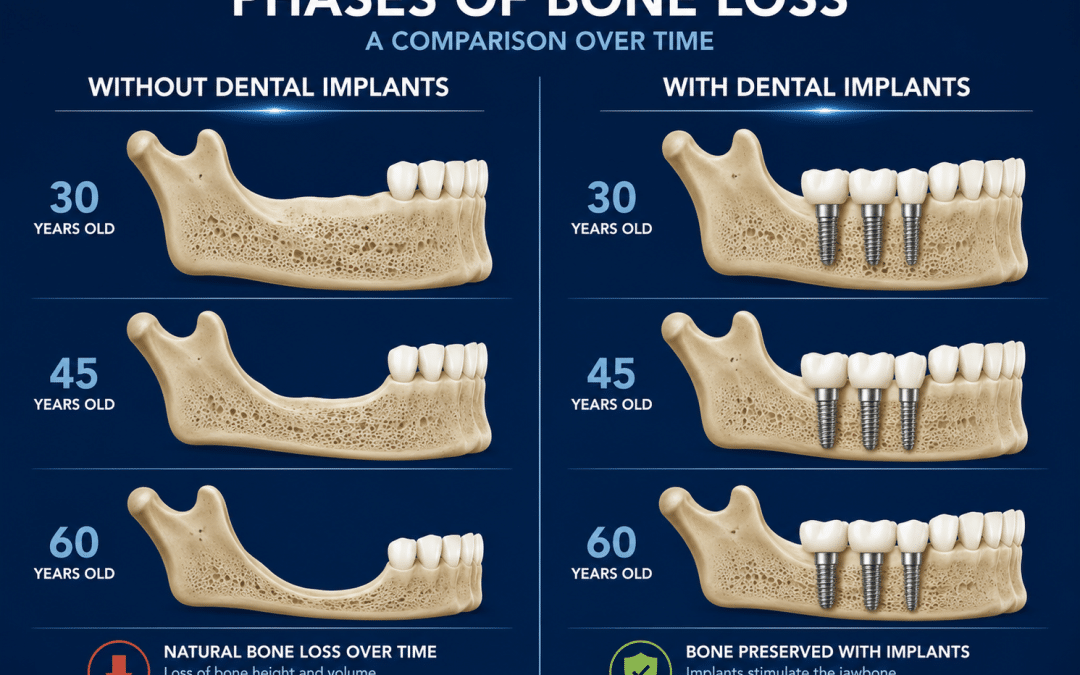
When a tooth is missing, the change affects more than the way your smile looks. Beneath the gums, the jawbone depends on regular stimulation from natural tooth roots to stay strong. Once a tooth is lost, that area of the bone no longer receives the same pressure from chewing. Over time, the body may begin to break down and reabsorb some of that unused bone.
This process is one of the reasons dental implants are such an important option for many patients with missing teeth. Unlike traditional dentures or bridges, dental implants replace more than the visible part of the tooth. The implant post is placed in the jawbone, where it functions like an artificial tooth root. This helps stimulate the bone, support the final restoration, and protect long-term oral health.
At iHeart Dental in Rincon, GA, our team helps patients understand how tooth loss affects the jaw, why timing matters, and whether dental implants in Rincon, GA may be the right solution for restoring comfort, function, and confidence.
This Article will address
- Why the jawbone can shrink after tooth loss
- How dental implants help preserve jawbone structure
- Whether bone loss can be reversed
- Whether bone loss is inevitable without implants
- How dentures and bridges compare to dental implants
- When bone grafting may be needed
- Why patients in Rincon, GA choose iHeart Dental for dental implant care
Why Does The Jawbone Shrink After Tooth Loss?
The jawbone is living tissue. Like other parts of the body, it responds to regular use. When a natural tooth is in place, the root transfers chewing pressure into the surrounding bone. This stimulation helps tell the body that the bone is still needed.
After a tooth is removed or lost, the missing root no longer provides that signal. Without regular stimulation, the jawbone in that area may begin to shrink. This is often a gradual process, which means many patients do not notice the changes right away.
Jawbone shrinkage can become more noticeable when multiple teeth are missing or when a tooth has been missing for a long time. Over time, bone loss may affect chewing strength, bite alignment, facial support, and future tooth replacement options.
What Is Jawbone Resorption After Tooth Loss?
Jawbone resorption is the process of the body breaking down and reabsorbing bone that is no longer being used in the same way. After tooth loss, this can happen because the bone no longer receives stimulation from the missing tooth root.
Resorption may cause the jawbone to lose height, width, or density. In practical terms, this can make the area thinner or weaker than it once was. For some patients, this change may affect whether a dental implant can be placed right away or whether additional preparation is needed first.
Bone resorption can also affect the way the face looks over time. When the jawbone loses volume, the cheeks and lips may have less support. This can contribute to a more sunken or aged appearance, especially when several teeth are missing.
How Do Dental Implants Preserve Bone?
Dental implants help preserve bone by replacing the missing tooth root. The implant post is placed into the jawbone, where it can provide stimulation similar to a natural root once it heals and integrates with the bone.
When you chew, pressure travels through the implant into the jawbone. This helps keep the surrounding bone active and reduces the bone shrinkage that often follows tooth loss. For this reason, dental implants are often recommended when patients want a tooth replacement option that supports both appearance and long-term oral health.
Dental implants can be used in several ways, depending on the patient’s needs. They may support a single crown, an implant-supported bridge, implant-supported dentures, or full mouth dental implant solutions. At iHeart Dental, we take time to evaluate each patient’s oral health, goals, and bone structure before recommending a treatment plan.
What Is Osseointegration And Why Does It Matter?
Osseointegration is the process where the jawbone naturally bonds with the dental implant post. This connection is one of the reasons dental implants can feel stable and function more like natural teeth.
Once the implant integrates with the bone, it creates a strong foundation for the final restoration. This may be a crown, bridge, denture, or full-arch implant solution. Healthy bone volume and density are important because the implant needs enough support to remain stable.
At iHeart Dental in Rincon, GA, our implant planning process may include advanced imaging, such as a Cone Beam CT Scanner, to help evaluate the jawbone and surrounding structures. This allows our team to plan treatment with greater detail and determine whether a patient has enough bone for implant placement.
Is Bone Loss Inevitable Without Implants?
Some degree of bone loss is common after tooth loss when the missing root is not replaced. The amount and speed of bone loss can vary from person to person. Factors such as oral health, age, the number of missing teeth, gum health, bite pressure, medical history, and how long the tooth has been missing can all play a role.
Traditional dentures and bridges can replace the visible part of a missing tooth, but they do not replace the root inside the jawbone. Because of this, they do not provide the same type of bone stimulation as dental implants.
That does not mean every patient will experience severe bone loss immediately. However, delaying tooth replacement can make future treatment more complicated. If you have a missing tooth, an implant consultation can help determine whether bone changes have already started and what options may be available.
Why Don’t Dentures Or Bridges Prevent Bone Loss The Same Way?
Dentures and bridges can be excellent treatment options for the right patient, but they work differently from dental implants.
Traditional dentures rest on top of the gums. They can restore the appearance of a full smile and help with chewing, but they do not anchor into the jawbone like implants. Traditional bridges are supported by nearby teeth rather than by a replacement root. They can close the space left by a missing tooth, but they also do not stimulate the jawbone in the same way an implant does.
Dental implants are different because they are placed in the jawbone. This allows them to replace the missing root structure, not just the visible tooth. For patients missing several teeth, implant-supported dentures or implant-supported bridges may offer improved support compared to traditional removable options.
At iHeart Dental, we offer several restorative options, including dental implants, implant-supported dentures, implant-supported bridges, traditional dentures, crowns, bridges, and full mouth restorations. Our goal is to help each patient choose the option that best supports their comfort, function, appearance, and long-term oral health.
Can Bone Loss Be Reversed?
Dental implants can help preserve existing bone after they are placed, but they do not automatically regrow bone that has already been lost. If significant bone loss has already occurred, a patient may need additional treatment before or during the implant process.
Bone grafting may be recommended when the jawbone needs more height, width, or density to support an implant. A bone graft helps rebuild or strengthen the area so the implant has a better foundation. Not every patient needs bone grafting, but it can be an important step for patients who have been missing teeth for a longer period of time.
The best way to know what is possible is to schedule a consultation. With the right evaluation and imaging, our team can explain whether dental implants are an option, whether bone grafting may be needed, and what treatment path may make the most sense.
Will I Need A Bone Graft Before Getting Dental Implants?
Some patients have enough healthy bone for dental implant placement without a bone graft. Others may need grafting if the tooth has been missing for a long time, if the area has lost bone volume, or if gum disease or past infection has affected the jawbone.
A bone graft does not automatically mean you cannot get implants. In many cases, it is part of preparing the area for a stronger, more stable result. The purpose is to create better support for the implant so it can function properly.
At iHeart Dental, we use advanced technology to help evaluate bone structure before making recommendations. Our Cone Beam CT Scanner can provide detailed information about bone height, width, and density. This helps us create a more personalized plan and gives patients a clearer understanding of their options.
How Does Bone Loss Affect Your Face, Bite, And Oral Health?
Bone loss can affect more than the space where a tooth is missing. When the jawbone begins to shrink, the surrounding teeth may shift toward the open space. This can change the way the upper and lower teeth fit together and may create bite problems over time.
Jawbone loss can also reduce support for the cheeks and lips. For patients with several missing teeth, this may contribute to changes in facial shape. Some people notice a collapsed or aged appearance when the jaw no longer provides the same structure.
Bone loss may also make future dental treatment more complex. When there is less bone available, replacing missing teeth may require additional planning or preparatory care. Addressing tooth loss earlier can help preserve more treatment options and protect long-term oral health.
How Can iHeart Dental Evaluate Bone Health Before Dental Implants?
Dental implant planning begins with a careful evaluation. At iHeart Dental, we take time to understand your oral health history, concerns, goals, and comfort level before recommending treatment.
During an implant consultation, our team may evaluate:
- The number and location of missing teeth
- Gum health
- Bite alignment
- Bone support
- Existing restorations
- Medical and dental history
- Your goals for appearance, comfort, and function
We may also use digital imaging to better understand the jawbone and surrounding structures. iHeart Dental offers advanced dental technology, including a Cone Beam CT Scanner, digital X-rays, a 3D printer, and monitors in every room. These tools help us plan treatment with accuracy and explain options in a way that feels clear and approachable.
We also understand that some patients feel nervous about dental treatment. Our office is designed to feel cozy, welcoming, and relaxed, and we offer comfort amenities such as earplugs, sunglasses, pillows, and blankets. Sedation options, including oral sedation and nitrous oxide, may also be available when appropriate.
Why Choose iHeart Dental For Dental Implants In Rincon, GA?
Patients choose iHeart Dental because we provide comprehensive dental care in one location with a focus on comfort, respect, and long-term health. Led by Dr. Misty M. Seale, our team is committed to helping patients feel informed and cared for at every step.
For patients considering dental implants in Rincon, GA, iHeart Dental offers:
- Dental implants
- Implant-supported dentures
- Implant-supported bridges
- Full mouth restorations
- Crowns and bridges
- Traditional dentures and partial dentures
- Extractions
- Same-day and emergency appointments when available
- Advanced technology for implant planning
- Comfort-focused amenities and sedation options
- Flexible payment options, including an in-house membership plan and CareCredit®
Our mission is simple: “A Smile is the Key to Everybody’s Heart.” We believe every patient deserves dental care that is thoughtful, respectful, and designed around their needs. Whether you are missing one tooth or exploring a full-mouth solution, our team is here to help you understand your options.
Schedule A Dental Implant Consultation In Rincon, GA
Tooth loss can lead to bone loss because the jawbone no longer receives stimulation from the missing tooth root. Dental implants can help protect jawbone health by replacing that root structure and supporting long-term function.
If you are missing one tooth or several teeth, iHeart Dental in Rincon, GA can help you take the next step with confidence. Our team can evaluate your bone health, explain whether dental implants are right for you, and recommend a treatment plan designed around your comfort, function, and long-term oral health.
Contact iHeart Dental today to schedule your dental implant consultation in Rincon, GA.
Sources
Misty M. Seale, DMD
Dr. Misty M. Seale, DMD, a graduate of the Medical College of Georgia, specializes in general, preventative, restorative, and cosmetic dentistry and is the proud owner of iHeart Dental. Her practice emphasizes comfort, convenience, and personalized patient care, providing a cozy environment that feels like a home away from home. Outside of her passion for dentistry, Dr. Seale enjoys spending time with her family, camping, and Jeeping.

A Smile is the Key to Everybody’s Heart
We are dedicated to providing the highest-level dental care in a comfortable and relaxed setting while giving love, compassion, and respect for our patients and their dental needs leading to a healthier smile.